
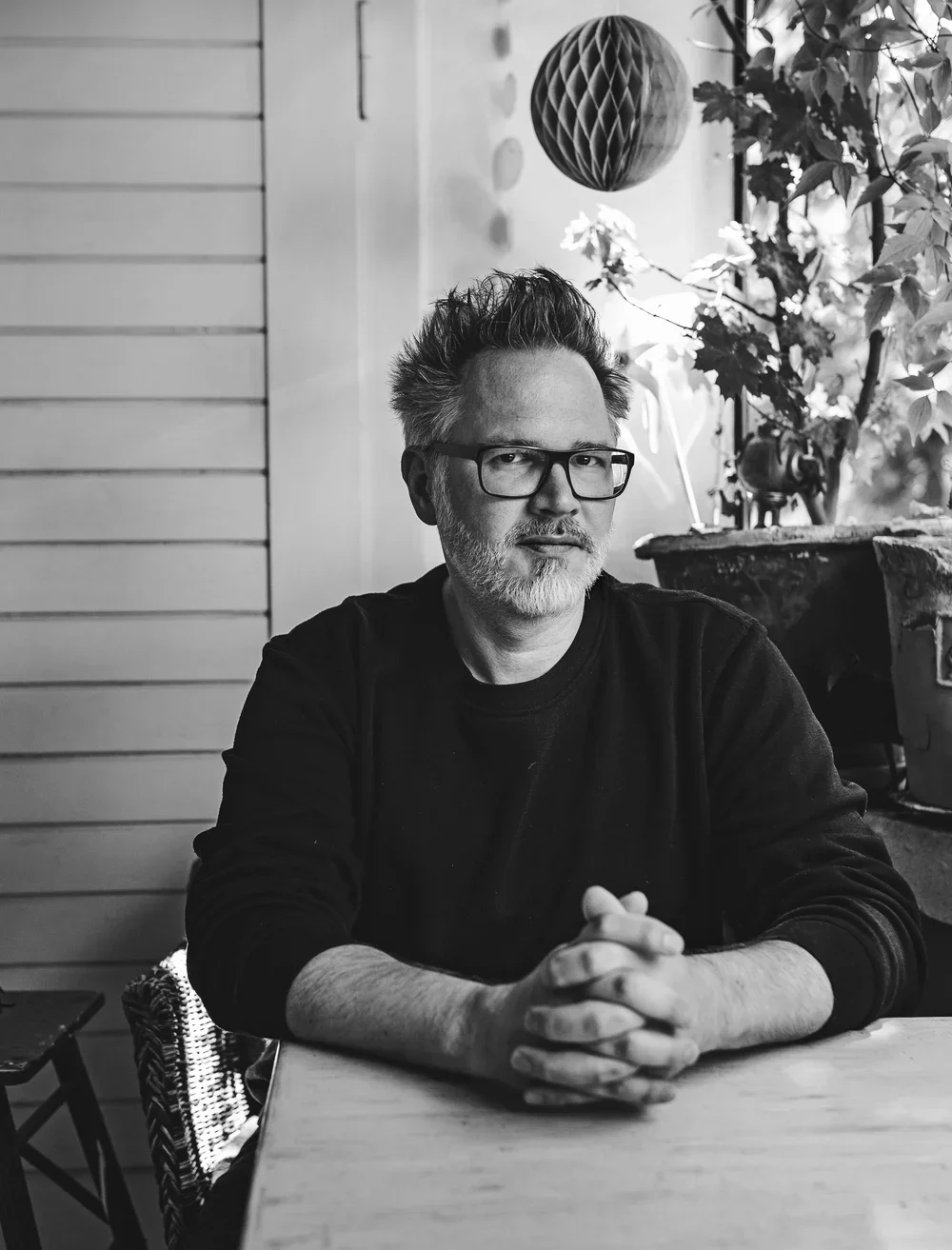
Here's a transcript of the introductory talk I gave to the Improvisation Course last Saturday. You can still join the course here.
---
The idea is that there’s enough time this year for everybody to find their own way into improvisation. That’s really the starting point. There are many angles to improvisation. Some of those angles might already be familiar. Some might not even be on your radar yet. So it’s important to find out what each person actually wants to learn.
Improvisation can mean very different things. The word itself can be misleading. It can also be restrictive, depending on what people associate with it. So one of the first questions is: what does improvisation actually mean to you? That might take the whole year to figure out.
For some, improvisation means creating music on the fly. Playing something unlearned or spontaneous. Jumping in and contributing something in the moment. For others, it might mean responding to a band, to a drone, to a looper. Hearing what’s happening and reacting to it.
But improvisation doesn’t require anything external. You can improvise with silence. You don’t need a drone. You don’t need another player. You don’t even need a context to start with. The interesting thing is that the moment you make the first sound, you create context. From that point on, everything relates to what has already happened.
Context is important. It unfolds linearly, but also in parallel. A first note can become part of a melody. Or it can function as a drone. Or it can be erased from importance later. Context is always there, but it can also begin from nothing.
Improvisation operates on multiple levels: physical skill, mental skill, emotional capacity. Physical ability on the instrument. Music theory or structural awareness. Emotional states — sadness, happiness, tension. All of these influence what sound comes out. Even something like having had an argument before a performance becomes part of the context. Sometimes context is dominant. Sometimes it gets overwritten by something else that’s hard to name.
Improvisation can also be very simple. It doesn’t have to be abstract or philosophical. You can define a restriction: for example, only use the notes C, E, and G. Learn where they are. Play them in different orders. Change dynamics. Change register. That’s already improvisation. Setting a system or a limitation and working inside it. Listening to what happens. Recording yourself if you want. Entering a feedback loop. By doing that repeatedly, you learn.
And then the question comes up: what is music? If improvisation is “creating music in the moment,” what does that even mean? Music can just be an order of notes with rhythm attached that feels meaningful to you. Ultimately, taste is the measuring tool. Each person has to measure for themselves what feels right.
There’s also the psychological side. For example: you’re playing over a bass note E. You choose notes that work with E. Then suddenly the bass player moves to F. Now something clashes. The question isn’t primarily how you fix it musically. The question is: what happens internally when that unexpected shift occurs? What stress arises? What feeling arises?
The real mastery lies in not reacting emotionally in a negative way. Not feeling bad about a note. If there’s tension, you can stay with it. Or you can change it. But the important thing is not to panic or collapse internally. Tension can be harmonic, rhythmic, or textural. A note might be out of tune, out of time, or simply unexpected. You can correct it. Or you can accept it. Or you can decide not to care. Not caring, in a healthy sense, is very difficult.
It’s important to listen. But listening doesn’t mean you must react. If someone else changes something, you don’t have to respond immediately. Sometimes the most difficult thing is to simply continue and let the situation unfold without attaching a corrective action.
There are different approaches we’ll explore. One is gestural playing. Instead of thinking in terms of scales and notes, you make a physical gesture and allow whatever sound comes out to be the result. You don’t analyze it in the moment. The opposite approach is highly conscious: ear training, identifying intervals, recognizing harmonic shifts, understanding what a note does in relation to a chord. Both approaches are valid. Both can be trained.
When someone says, “This section is in C major,” what does that actually mean? It might simply mean that C feels like home. Beyond that, it doesn’t dictate everything. You can reduce it to something very simple: C is probably safe.
Improvisation can also be looked at through traditions. Jazz improvisation, for example, is often improvising on a theme. Not just playing over chord changes, but embellishing a melody, creating counter-melody, ornamenting something that already exists. In traditional jazz, the improviser often expresses the composition rather than just expressing themselves. It’s about the sound and the tradition.
Other traditions have different rule sets. In Indian classical music, for example, a raga is not just a scale. It’s a mood, a set of rules about movement, emphasis, and feeling. The goal is to evoke something specific.
There’s also freer improvisation. In the late 1960s, there was a movement that aimed to avoid repetition entirely, even avoiding repeating interactions between players. Radical non-continuation. Breaking ideas constantly. That’s extremely challenging, but possible.
Improvisation can be done with anything. You don’t need an instrument. You can use found objects. A bottle being crumpled can become music. It’s not about pitch or rhythm necessarily. It can be tactile. It can be physical. It can be about sensation and feedback.
The feedback loop is central. You make a sound. You feel something. You hear something. That feeds back into the next action. Sometimes it feels like the instrument is fighting you. Sometimes it feels like your hands melt into it. External validation doesn’t necessarily match your internal experience. You might feel terrible and someone else thinks it was amazing. That disconnect is normal.
Ultimately, there’s no responsibility for what others hear. And in a way, there’s not even responsibility for what you hear. That can be difficult to accept.
For the first assignment: take six days. Every day, define a specific amount of time. Ten minutes. Thirty minutes. Whatever you choose. But choose it consciously. Don’t wait to “have time.” Take the time.
Plug in the instrument. Or don’t, if that’s too much. Put your hands on it. Before making a sound, just touch it. Move your hands across the strings. Feel it. When you want to make a sound, make a sound.
While doing this, become aware of your responses. Emotions. Thoughts. Physical sensations. If you think “this is boring,” notice that thought. You can continue anyway. Or you can change something: stand up, sit down, dim the lights, turn on a quiet metronome. But stay in the process.
You can play one note. You can use one finger. You can try the pinky. Nobody is listening. The point is not to create something impressive. It’s to experience the interaction with the instrument.
Even if you’re tired. Even if you’re sick. Even if you only put your hand on the instrument for five minutes. The key is consistency. Every day. Simplicity avoids complication. No cheat days. No mental negotiation.
The purpose is to create a shame-free discipline. To avoid the pattern of starting something, stopping, feeling ashamed, and never returning to it. This is about creating a space where experimentation is allowed and respected.
That’s the real starting point.
Everything else builds from there.